

Hey there! As a supplier of return pins, I often get asked about what sets return pins apart from other pins out there. So, I thought I'd take a moment to break it down for you.

First off, let's talk about what a return pin actually is. A return pin is a crucial component in mold systems. It's mainly used to ensure the proper return of the ejector plate to its original position after the ejection process. In simple terms, it helps the mold go back to its starting point so that the next molding cycle can begin smoothly.
Now, let's compare return pins with some other common pins in the mold industry.
Return Pins vs. Mold Bronze Bushings
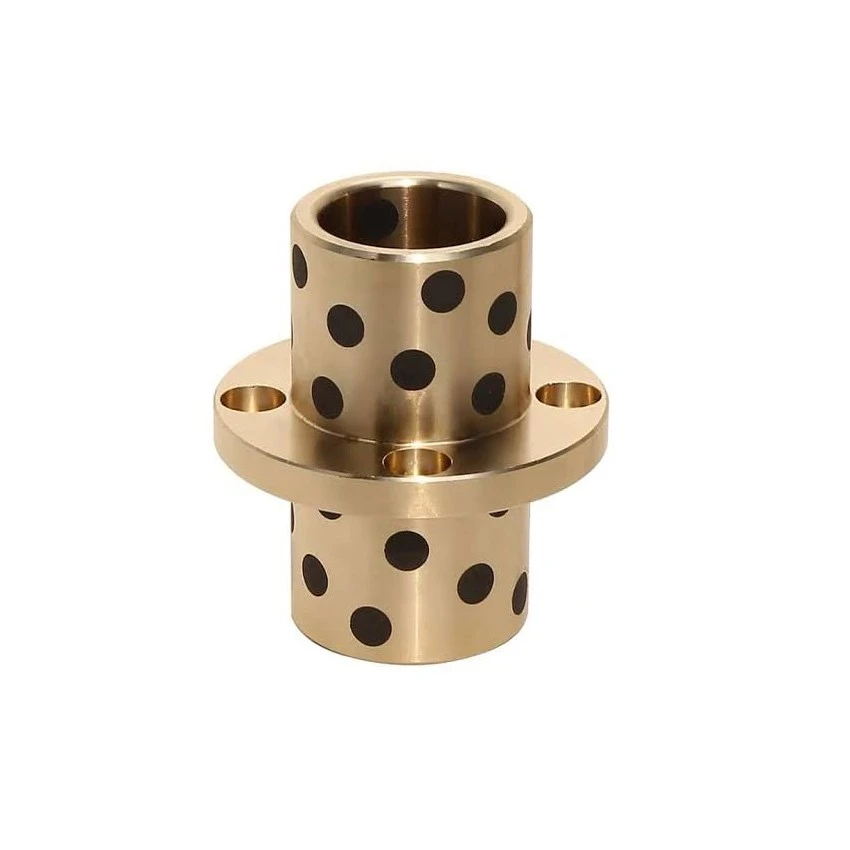
Mold bronze bushings, like the ones you can learn more about Mold Bronze Bushing, have a different function. Bronze bushings are used for reducing friction and wear between moving parts in a mold. They act as a bearing surface, allowing other components to slide or rotate smoothly.
Return pins, on the other hand, are focused on the movement of the ejector plate. They are designed to withstand the forces exerted during the return motion and ensure accurate positioning. While both are important for the overall performance of a mold, their roles are distinct.
Bronze bushings are usually made of bronze alloys, which have excellent self - lubricating properties. This helps in reducing maintenance and increasing the lifespan of the mold. Return pins, however, are often made of high - strength steels to handle the impact and repetitive forces.
Return Pins vs. Mold Guide Pillars
Mold guide pillars, as described in Mold Guide Pillar, are used to guide the movement of the mold halves during the closing and opening processes. They ensure that the two halves of the mold align precisely, which is crucial for producing high - quality molded parts.
Return pins, again, have a different job. While guide pillars are about aligning the mold halves, return pins are about resetting the ejector system. Guide pillars are long and are installed on one mold half and fit into corresponding holes in the other half. They have a smooth surface finish to allow for easy sliding.
Return pins are typically shorter and are mainly associated with the ejector mechanism. They need to be strong enough to push the ejector plate back without bending or breaking. The design of guide pillars often focuses on alignment accuracy, while return pins are more about force transmission.
Return Pins vs. Return Rods
You might be thinking, "Aren't return pins and return rods the same thing?" Well, they're similar but not identical. Return rods, as you can find more info on Return Rod, are also used to return the ejector plate. However, there are some differences.
Return rods are generally more of a general - purpose term. They can come in different shapes and sizes, and their design might be a bit more flexible. Return pins, on the other hand, have a more standardized design. They are usually cylindrical with a specific diameter and length, which is designed to fit precisely into the mold's ejector system.
Return rods might be used in some applications where a more customized solution is needed. For example, in a mold with a unique ejector design, a return rod can be fabricated to fit the specific requirements. Return pins, being more standardized, are widely used in most common mold designs because they offer a reliable and consistent performance.
Design and Construction of Return Pins
Return pins are designed with a few key factors in mind. First, they need to have a proper diameter. A too - thin pin might bend under the return force, while a too - thick pin can add unnecessary weight and cost to the mold. The length of the return pin is also critical. It needs to be long enough to fully return the ejector plate but not so long that it interferes with other components in the mold.
The surface finish of return pins is important as well. A smooth surface reduces friction between the pin and the surrounding components, which helps in the smooth operation of the ejector system. The material used for return pins is usually a high - carbon steel or alloy steel. These materials offer high strength and good wear resistance, which is essential for the repetitive nature of the return motion.
Importance in the Molding Process
In the molding process, the proper functioning of return pins is crucial. If a return pin fails to work correctly, it can lead to several problems. For example, if the ejector plate doesn't return to its proper position, the next molding cycle might not start correctly. This can result in misaligned parts, flash (excess material), or even damage to the mold.
Return pins also play a role in the overall efficiency of the molding process. A well - designed return pin can reduce the cycle time by ensuring a quick and accurate return of the ejector plate. This means more parts can be produced in a shorter period, which is a big plus for manufacturers.
Quality Control of Return Pins
As a supplier, quality control is a top priority for us. We perform a series of tests on our return pins to ensure they meet the highest standards. We check the dimensions of the pins using precision measuring tools to make sure they are within the specified tolerances.
We also test the hardness of the pins. A proper hardness is essential for the strength and wear resistance of the return pin. We use hardness testing machines to measure the hardness at different points on the pin.
Surface finish is another aspect we pay close attention to. We use surface roughness testers to ensure that the surface of the return pin is smooth enough for proper operation. Any defects in the surface, such as scratches or pits, can affect the performance of the pin.
Applications of Return Pins
Return pins are used in a wide range of molding applications. They are commonly found in injection molding, die - casting, and compression molding processes. In injection molding, where molten plastic is injected into a mold cavity, return pins ensure that the ejector system is ready for the next injection cycle.
In die - casting, where molten metal is forced into a mold, return pins play a similar role. They help in resetting the ejector plate so that the newly cast part can be ejected and the mold can be prepared for the next casting. Compression molding, which involves compressing a material between two mold halves, also relies on return pins for the proper operation of the ejector system.
Why Choose Our Return Pins
As a supplier, we pride ourselves on providing high - quality return pins. Our pins are made from the best materials, and we follow strict quality control procedures. We offer a wide range of sizes and specifications to meet the diverse needs of our customers.
We also understand the importance of timely delivery. We have a well - organized production and logistics system in place to ensure that our customers get their return pins when they need them. Our customer service team is always ready to answer any questions you might have and provide technical support.
If you're in the market for return pins, whether you're a small - scale mold maker or a large - scale manufacturing company, we'd love to hear from you. We can provide you with samples to test and see the quality of our products for yourself.
Contact us today to start a discussion about your return pin requirements. Whether you need a standard size or a custom - designed return pin, we're here to help you find the best solution for your molding needs.
References
- Mold Design Handbook
- Plastic Molding Technology Textbooks
- Industry Standards for Mold Components

