Hey there! I'm a supplier of 2344 Steel, and I've been in this business for quite some time. Today, I want to talk about the limitations of cold-forming 2344 Steel. It's important for you to know these things before you decide to use this steel in your projects, so let's dive right in.
1. Hardness and Brittleness
One of the main limitations of cold-forming 2344 Steel is its hardness. 2344 Steel is known for its high hardness and good wear resistance, which is great for many applications. But when it comes to cold-forming, this hardness can be a real pain.
Cold-forming involves deforming the steel at room temperature. When you try to shape 2344 Steel this way, its high hardness means you need a lot of force. And as you apply more force, there's a risk of the steel becoming brittle. Brittle steel is more likely to crack during the forming process. This can lead to defects in the final product and even make it unusable.
For example, if you're trying to bend a piece of 2344 Steel into a complex shape using cold-forming techniques, the stress points might experience cracking. This is especially true if the bend radius is too small. So, if you need parts with tight bends or complex geometries, cold-forming 2344 Steel might not be the best option.
2. Limited Ductility
Ductility is the ability of a material to deform under tensile stress without breaking. 2344 Steel has relatively limited ductility compared to some other steels. When cold-forming, ductility is crucial because it allows the steel to stretch and flow into the desired shape.
Since 2344 Steel doesn't have high ductility, it can only be deformed to a certain extent during cold-forming. If you try to push it beyond its limits, it will fracture. This restricts the types of shapes and Designs you can achieve through cold-forming.
For instance, you might want to form a deep-drawn part using 2344 Steel. But because of its low ductility, the steel might not be able to stretch enough to fill the mold properly. This could result in a part with thin spots or even holes in some areas.
3. Work Hardening
Another significant limitation is work hardening. When you cold-form 2344 Steel, the deformation process causes the steel's structure to change. As you keep working on it, the steel becomes harder and stronger in the areas where it's being deformed. This is called work hardening.
The problem with work hardening is that it makes the subsequent forming operations more difficult. You need to apply even more force to continue deforming the steel, which can lead to increased wear and tear on your forming equipment. It also increases the risk of cracking and other defects.
Let's say you're doing a multi-step cold-forming process on 2344 Steel. After the first step of forming, the steel has already work-hardened in the deformed areas. When you try to perform the second step, you'll find that it's much tougher to shape it further. In some cases, you might even need to anneal the steel between steps to reduce the work hardening and make it more formable again. But annealing adds extra time and cost to the production process.
4. Surface Finish Issues
Cold-forming 2344 Steel can also cause problems with the surface finish. During the forming process, the steel comes into contact with the forming tools. Due to the high forces involved and the hardness of the steel, there can be significant friction between the steel and the tools.
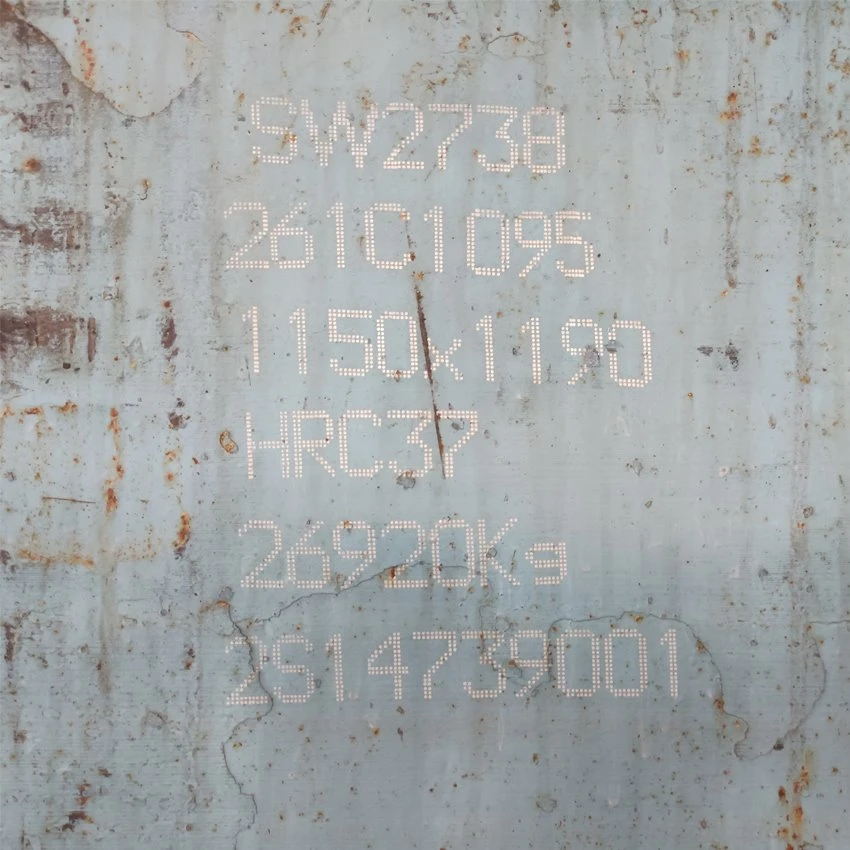

This friction can lead to scratches, galling, and other surface imperfections on the 2344 Steel. If your application requires a smooth and high-quality surface finish, these surface defects can be a major issue. For example, in the automotive industry, parts with poor surface finishes might not fit together properly or could cause noise and vibration problems.
Moreover, the surface finish can also affect the corrosion resistance of the steel. Scratches and other surface damage can act as sites for corrosion initiation, reducing the overall durability of the part.
5. Comparison with Other Steels
It's also useful to compare the limitations of cold-forming 2344 Steel with other steels. For example, NAK80 Steel is known for its excellent machinability and good polishability. When it comes to cold-forming, NAK80 Steel is generally more ductile than 2344 Steel, which means it can be formed into more complex shapes with less risk of cracking.
Dievar Steel is another option. It has good thermal fatigue resistance and is often used in die-casting applications. Dievar Steel can also offer better formability in some cases compared to 2344 Steel, especially when it comes to cold-forming processes that involve high-stress levels.
SW2738 is a popular plastic mold steel. It has a good combination of hardness and toughness, and its cold-forming properties are generally more forgiving than those of 2344 Steel. This makes it a better choice for some applications where complex cold-forming operations are required.
Conclusion
In conclusion, while 2344 Steel has many great properties such as high hardness and wear resistance, it has certain limitations when it comes to cold-forming. The hardness, limited ductility, work hardening, and surface finish issues can make cold-forming 2344 Steel a challenging process.
However, this doesn't mean that you should completely avoid cold-forming 2344 Steel. In some cases, with proper planning, tooling design, and process control, you can still achieve successful cold-forming results. If you're considering using 2344 Steel for your project and need to perform cold-forming operations, it's important to work closely with an experienced engineer or a supplier like me.
I'm here to help you understand these limitations and find the best solution for your specific needs. Whether you need advice on the forming process, tool selection, or just want to discuss your project in detail, don't hesitate to get in touch. We can work together to ensure that you get the most out of 2344 Steel in your applications.
References
- "Metallurgy of Steels" - A comprehensive textbook on steel properties and behavior.
- Industry reports on steel forming processes and best practices.